
Book your hunt in Spain
Hunting in Spain
Top Hunting Packages

SOUTHEASTERN IBEX
- 1 x Limitless trophy fee size
- 4 x Night accommodation, full board
- 3 x Hunting days (1x1 guiding)

RONDA IBEX
- 1 x Limitless trophy fee size
- 4 x Night accommodation, full board
- 3 x Hunting days (1x1 guiding)

IBERIAN RED STAG
- 1 x Limitless trophy fee size
- 4 x Night accommodation, full board
- 3 x Hunting days (1x1 guiding)
Hunting in spain
Hunting in Spain: The Ultimate Guide to an Unforgettable Experience
Hunting in Spain is one of the oldest and most deeply rooted traditions in the Iberian Peninsula. Long before it became a destination for international travelers, this country had already built a hunting culture that shaped its landscapes, its rural economy, and its social fabric. Today, that same culture welcomes hunters from every corner of the world — and delivers an experience that is genuinely difficult to find anywhere else.
Whether you are planning your first hunt trip to Spain or you have been here before and want to go deeper into what the country has to offer, this guide covers the essentials: the species, the seasons, the regions, the hunts, and everything in between.
Why Hunters Keep Coming Back to Spain
Ask any hunter Spain has hosted more than once and the answer is almost always the same: it gets under your skin. There is something about the combination of wild, open landscapes, abundant and varied game, and a culture that genuinely respects the hunt that is hard to replicate elsewhere in Europe.
Spain is a large country with an extraordinary range of habitats. You have the dehesas of Extremadura — vast estates of cork and holm oak where wild boar and red deer roam freely across tens of thousands of hectares. You have the high sierras of Andalusia and the Sistema Central where ibex pick their way across sheer rock faces at altitude. You have the rolling hills of Castile, the dense pine forests of Aragón, the scrublands of La Mancha. Each region hunts differently, feels different, and delivers a different kind of experience.
That variety is a big part of what makes hunting Spain such a compelling option. A hunter who comes for wild boar one year can return the next for a red deer stalk during the rut and feel like they are in a completely different country — because in many ways they are.
The other factor is the culture itself. Hunting here is not a fringe activity or something that needs to be defended. It is woven into daily life in rural Spain, celebrated in the local calendar, and practiced with a pride and seriousness that you feel immediately when you arrive at an estate and meet the people who work it year-round.
The Best Hunting in Spain: Species and Styles
The best hunting in Spain depends entirely on what you are after. The country supports a wide range of both big game and small game species, and the hunting styles vary accordingly.
Wild boar are arguably the most sought-after species by international visitors. Spain has one of the largest and healthiest wild boar populations in Europe, and the terrain — thick Mediterranean scrub, oak forests, rocky hillsides — creates ideal habitat for animals that grow large and smart. Wild boar hunting in Spain can be done through driven hunts, stalking, or high-seat hunting over bait or natural feeding areas, and each method has its own particular appeal.
Red deer are another flagship species. The Iberian red deer is a distinct subspecies — smaller than its northern European relatives but with exceptional antler formations that make it a prized trophy. The rut in September and October, known locally as la berrea, is one of the most extraordinary wildlife spectacles in Europe. Stags roar through the dawn mist, battles play out in open clearings, and the whole landscape seems to vibrate with energy. For hunters who have never experienced it, a stalking hunt during the rut is genuinely life-changing.
Iberian ibex offer some of the most physically demanding and rewarding hunting available anywhere on the continent. Four distinct subspecies are found across different mountain ranges — the Gredos, the Sierra Nevada, the Beceite, the Ronda — each with its own character and its own trophy potential. This is mountain hunting at its finest, requiring fitness, patience, and skill, and the setting alone makes it worth the effort.
Fallow deer, mouflon, and roe deer round out the big game options, while small game hunters will find outstanding opportunities for red-legged partridge, woodcock, pigeon, and rabbit across many regions.
For those who want to hunt Spain and are not sure where to start, a conversation with an experienced outfitter will quickly narrow down the options based on your target species, your preferred style of hunting, and your available dates.
Wild Boar Hunting in Spain: What You Need to Know
No guide to hunting in Spain would be complete without spending serious time on wild boar. This is the species that defines Spanish hunting for much of the international community, and for good reason.
Wild boar hunting in Spain falls broadly into two categories: the montería and individual stalking hunts.
The montería is the defining institution of Spanish big game hunting. It is a large-scale driven hunt organized across a private estate, sometimes covering thousands of hectares in a single day. Beaters — known as ojeadores — work through the scrubland with large packs of hounds, pushing game toward the hunters stationed at fixed positions around the perimeter. The action can be intense. On a well-run montería it is entirely normal to see twenty, thirty, or even fifty animals in the course of a morning, with wild boar, red deer, and mouflon all moving through the line.
Monteria Spain hunting is not just a hunt — it is a social event with deep cultural roots. There is a formality to how positions are assigned, a protocol to how the hunt is run, and a tradition of communal celebration afterward that makes the whole experience feel like something you have been invited into rather than something you have simply paid for. The post-hunt gathering — with game laid out in the traditional display and hunters sharing food, wine, and stories — is as much a part of the experience as the shooting itself.
For those who prefer something quieter, stalking wild boar at first or last light is equally effective and has its own particular intensity. An experienced guide will put you in position over a game trail, a feeding area, or a wallow, and the encounter when it comes will be close and fast. This style of wild boar hunting in Spain suits hunters who want a more personal and tactical challenge.
Spain Hunting Season: Timing Your Trip
Getting the timing right matters enormously when planning a hunt in Spain. The hunting season in Spain is regulated at the regional level, which means exact dates vary by autonomous community and by species, but the following gives a reliable general picture.
The main big game season runs from September through February, with the peak period falling between October and January. This is when monterías are most commonly organized, when wild boar populations are at their most active, and when the widest range of species can be legally hunted.
September and October are the months of the red deer rut, making this period the first choice for anyone targeting trophy stags. The combination of rutting behavior — which makes stags vocal, visible, and less cautious than usual — and the dramatic autumn landscapes creates conditions that experienced stalkers rate very highly.
November through January covers the heart of the montería calendar and the prime period for wild boar. Cooler temperatures mean animals are moving more during daylight hours, drives push game more predictably, and the short winter days create a particular atmosphere in the field that is hard to describe but immediately felt.
The Spain hunting season for ibex varies by subspecies and region but generally falls between September and March, with some subspecies available year-round on a quota basis. Red-legged partridge season typically runs from October through January.
If you are planning a hunt trip to Spain, booking well in advance — particularly for premium dates in October and November — is strongly advisable. The best estates and the most reputable outfitters fill their calendars early.
Regions: Where to Hunt in Spain
Spain covers more than half a million square kilometres and its hunting regions are genuinely distinct from one another. Choosing where to base your hunting trip in Spain is as important as choosing which species to target.
Extremadura is considered by many experienced hunters to be the finest big game territory in the country. The dehesas here — vast, privately managed estates of Mediterranean woodland — support exceptional populations of wild boar, red deer, and mouflon. This is montería country at its purest, and some of the most prestigious private hunting estate Spain operations are located here.
Castile-La Mancha is the heartland of red-legged partridge shooting and home to some of the most meticulously managed driven partridge estates in Europe. The flat, open country and long shooting days make for a style of wingshooting that is unlike anything available in northern Europe.
Andalusia offers a dramatic combination of lowland estates and high sierra territory. Wild boar, red deer, and mouflon are all abundant in the lowlands, while the mountain ranges — particularly the Sierra Nevada and the Serranía de Ronda — provide outstanding ibex hunting in genuinely spectacular terrain.
Aragón and the Pyrenean foothills are the destination for chamois and Pyrenean ibex hunters, as well as for those seeking woodcock, snipe, and upland birds in a mountain setting.
Castile and León is excellent for red deer stalking, particularly during the rut, and supports strong wild boar populations that make it a reliable choice for hunters visiting in the autumn and winter months.
Hunting Trips in Spain: Planning the Details
A well-organized hunting trip in Spain covers far more than the hunt itself. Working with a reputable outfitter means that the logistics — licenses, firearms documentation, accommodation, transfers, guides, trophy management — are all handled professionally, leaving you to focus entirely on the experience.
International hunters need a Spanish hunting license, which your outfitter will arrange on your behalf as part of the booking process. If you are bringing your own firearms, they will need to be properly declared and licensed for import — again, a process that your outfitter will guide you through step by step. Alternatively, many estates can provide firearms if you prefer to travel light.
Accommodation ranges from comfortable rural guesthouses to beautifully restored manor houses and cortijos on private estates. For luxury hunting Spain packages, five-star options with private chefs, dedicated service staff, and exclusive estate access are available and increasingly in demand among international clients.
The guiding standard across Spain’s established hunting operations is high. Guides are experienced, deeply knowledgeable about the land they work, and — at reputable outfitters — fluent in English. The relationship you build with your guide over the course of a hunting trip in Spain is often one of the most memorable parts of the experience.
Hunting Trips Spain for Groups
Spain’s hunting infrastructure is exceptionally well suited to group travel. The montería format — which requires a line of hunters — naturally accommodates groups of eight to twenty, and many of the country’s top estates are set up specifically for group visits.
Hunting trips Spain for corporate groups, stag parties, family reunions, and international hunting clubs are all common. The combination of extraordinary hunting, exceptional food and wine, and the unique social atmosphere of a traditional montería makes these trips popular well beyond the dedicated hunting community.
Private estate bookings — where an entire estate is exclusively reserved for your group — offer the highest level of flexibility and privacy. You set the schedule, choose your target species, and experience the hunt entirely on your own terms. This is the format that most elite hunting trips Spain operators recommend for groups who want to combine outstanding hunting with genuine exclusivity.
Hunting in Spain Prices: A Realistic Overview
Hunting in Spain prices vary considerably depending on the type of hunt, the target species, the prestige of the estate, and the level of service included. The following gives a general indication of what to expect.
A place on a wild boar montería typically ranges from around eight hundred to two thousand five hundred euros per gun, depending on the estate and the organization of the hunt. This usually includes the day’s hunting, guiding, and a traditional lunch in the field.
Red deer stalking packages range from approximately one thousand five hundred to four thousand euros, with trophy fees and any additional species charged separately. Ibex hunts vary considerably by subspecies and location but typically start at around two thousand euros and can exceed six thousand for premium subspecies in highly regarded locations.
Driven partridge days — which are priced per bird — represent a significant investment for high-bird-count days at top estates, but the experience is considered by many wingshooting enthusiasts to be among the finest available anywhere in the world.
For luxury hunting Spain packages that include exclusive estate access, premium accommodation, private chefs, and full concierge service, budgets of ten thousand euros and above per week for a group are realistic. These packages are designed for clients who want a completely seamless and exceptional experience at every level.
It is worth noting that hunting in Spain prices, at virtually every level, represent strong value when measured against the quality and exclusivity of what is delivered. Hunters who have experienced comparable hunts in other European countries consistently find Spain competitive.
Traditional Hunt in Spain: The Montería in Detail
The traditional hunt in Spain — the montería — deserves a dedicated description because it is genuinely unlike anything available in other hunting destinations.
A classic montería begins before dawn. Hunters arrive at the estate and are assigned their positions — puestos — which are marked on a detailed map of the day’s drive. The positions are drawn by lot or allocated by seniority, and there is a quiet ceremony to the whole process that sets the tone for the day.
As the sun rises, the beaters and their hounds enter the drive. The sound builds gradually — the distant cry of the dogs, the shouts of the ojeadores, the crack of branches as game begins to move. Then the animals appear: a boar breaking through the scrub at full speed, a stag crashing across an open clearing, a mouflon picking its way cautiously along a ridge. The shooting can be intense and fast, or it can be sparse and demanding — the forest keeps its own counsel.
At the end of the drive, all hunters gather for the monteo: the traditional display of the day’s game. Animals are laid out in a line while hunters, guides, and estate staff gather around them. It is a moment of shared reflection — a recognition of what the land has given and a mark of respect for the animals taken. Then comes lunch.
The lunch after a montería is an institution in itself. Long tables under canvas or in a rustic outbuilding, platters of local cured meats and cheeses, slow-cooked game stews, bread, and good wine. Conversations flow across languages as hunters from different countries find the common ground of a shared morning in the field.
This is hunting trip Spain at its most authentic.
Booking Your Hunt in Spain: Where to Start
If you are ready to book a hunting trip in Spain, the process is straightforward when you work with an established and reputable outfitter.
Start by defining your priorities: which species, which style of hunt, which dates, and what kind of experience you want around the hunt itself. Share this with your outfitter and let them propose the estates and packages that best match your brief.
Ask for references and verify them. A good outfitter will have a track record with international clients and will be transparent about the estates they work with, the hunting conditions you can expect, and exactly what is and is not included in the price.
Book early, particularly for autumn dates and for prime monterías. The best estates have loyal repeat clients who rebook from one year to the next, and availability at short notice can be limited.
Spain hunter experiences range from the accessible to the extraordinary, but at every level the country punches well above its weight. If you have been thinking about it, the best time to make it happen is now.
Final Thoughts
Hunting in Spain is one of those experiences that changes how you think about what hunting can be. It combines wild, unpredictable nature with a deep human tradition, and wraps both in a landscape and a culture that are entirely its own.
Whether you are after the raw excitement of a wild boar montería, the quiet intensity of a mountain ibex stalk, the elegance of a driven partridge day, or simply the chance to spend time in extraordinary countryside with people who know it intimately — Spain delivers.
The season is waiting. The estates are ready. All that remains is to book your place.
WE ARE HUNTERS

We run exclusive private areas and tags in public hunting grounds to hunt Ronda ibex, Southeastern ibex, Beceite ibex and Gredos ibex and our magnificient Iberian stags. These game species are a challenge for Hunters from around the world and become hunting in Spain an unforgattable hunting experience.
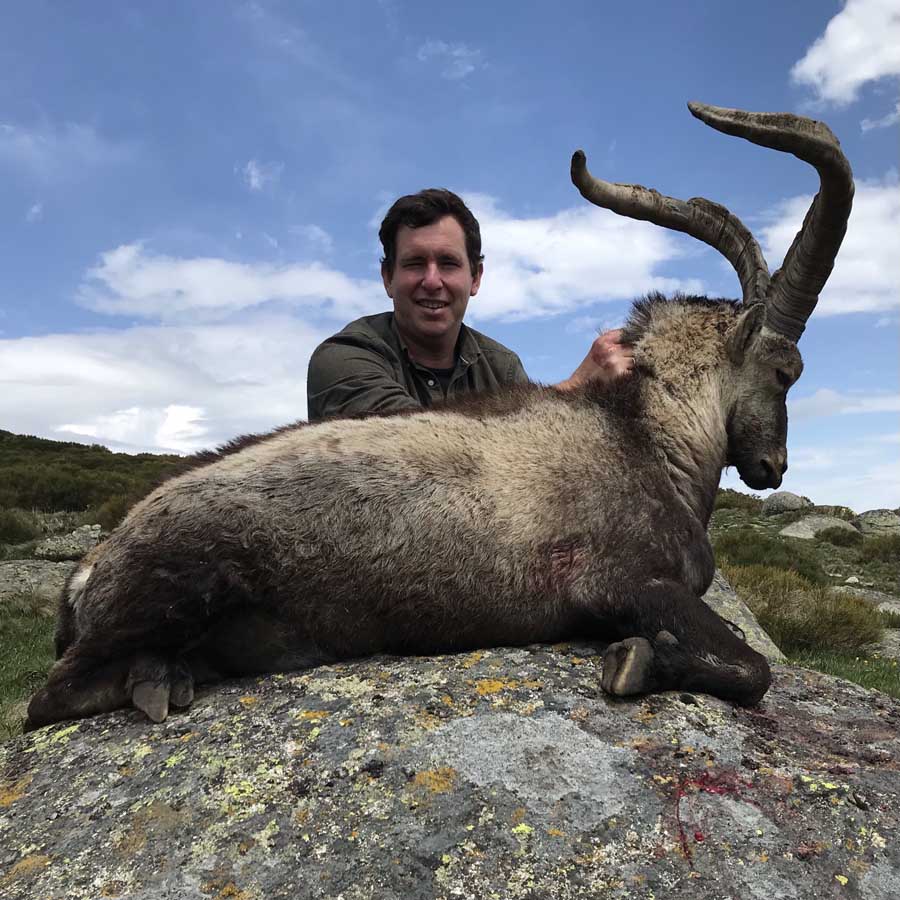
We provide comfortable full board accommodation in our hunting areas
Our team will pick you up at the closest airport to the hunting area
You can immediately ask us for more info
Our service is confidential and personalized to all our clients
SPANISH HUNTING
You have available videos of our hunts on our YOUTUBE channel. Thanks to these reports you can see landscapes, game species, etc. How hunting in Spain is.